Gross Domestic Product (GDP)
Economic growth is one of the most important indicators of a country's overall financial health. Governments, businesses, policymakers, and investors closely monitor economic performance because it influences employment, income, consumption, industrial production, and investment activity. Among the many measures used to assess the strength of an economy, Gross Domestic Product (GDP) is the most widely recognized. GDP provides a comprehensive picture of the economic output generated within a country and serves as a key indicator for evaluating long-term economic progress. For investors, understanding GDP is essential because changes in economic growth often influence corporate earnings, investor confidence, and stock market performance.Gross Domestic Product refers to the total monetary value of all final goods and services produced within a country's borders during a specific period, usually a quarter or a year. It measures the size of an economy by calculating the combined value of production across all sectors, including agriculture, manufacturing, construction, services, and technology. Since GDP reflects overall economic activity, it provides valuable insights into whether the economy is expanding, slowing down, or experiencing a recession.An increase in GDP generally indicates that businesses are producing more goods and services, consumers are spending more, employment opportunities are improving, and investments are increasing. Such conditions often create a favourable environment for corporate growth, leading to stronger company earnings and improved investor sentiment. Conversely, declining GDP growth may signal weakening demand, reduced business activity, lower consumer spending, and slower economic expansion, all of which can negatively affect corporate profitability and stock market performance.The relationship between GDP and the stock market is important but not always straightforward. Many people assume that a growing economy automatically results in rising stock prices. While economic expansion generally benefits businesses, stock markets often move ahead of official economic data because investors focus on future expectations rather than current conditions. Share prices typically reflect what investors believe will happen in the coming months or years instead of simply reacting to present-day economic performance.This forward-looking nature makes the stock market a leading indicator of economic activity. Investors continuously evaluate future business prospects by analysing expected earnings growth, consumer demand, government policies, technological developments, and global economic conditions. If market participants anticipate stronger economic growth in the future, they may begin purchasing shares well before official GDP figures confirm the improvement. Similarly, if investors expect economic conditions to weaken, stock prices may decline even while current GDP data remains positive.During periods of economic expansion, businesses generally experience higher demand for their products and services. Increased sales often translate into rising revenues, stronger profitability, and greater cash flows. Companies may use these additional earnings to expand operations, invest in new technologies, repay outstanding debt, or distribute dividends to shareholders. Improved financial performance usually attracts greater investor interest, contributing to higher market valuations and rising stock prices.Economic growth also encourages business investment. As consumer demand strengthens, companies become more willing to establish new production facilities, hire additional employees, introduce new products, and expand into new markets. Financial institutions are often more willing to extend credit during periods of stable economic growth, supporting further business expansion. This positive cycle contributes to higher productivity, stronger employment, and increased national income.However, GDP should not be viewed as the sole determinant of stock market performance. Financial markets are influenced by numerous other variables, including inflation, interest rates, exchange rates, government policies, geopolitical developments, and corporate performance. In some cases, stock markets may perform well despite relatively slow economic growth, while strong GDP growth may coincide with weak equity market returns if investors have already priced in optimistic expectations.International experience demonstrates that GDP and stock market performance do not always move together. Some countries have experienced periods during which economic growth slowed while equity markets continued to rise. In other cases, economies expanded rapidly without generating equally strong stock market returns. These differences occur because stock valuations reflect multiple factors beyond GDP alone, including currency movements, corporate profitability, investor sentiment, and global capital flows.For this reason, investors often complement GDP analysis with other economic indicators when evaluating market conditions. Measures such as inflation, unemployment, industrial production, consumer confidence, fiscal policy, and monetary policy provide additional information that helps investors develop a more comprehensive understanding of the economic environment. Analysing multiple indicators together produces a more balanced assessment than relying exclusively on GDP figures.One widely discussed measure that combines economic output with financial markets is the Market Capitalization-to-GDP Ratio, sometimes referred to as the Buffett Indicator. This ratio compares the total market value of all publicly listed companies with the country's Gross Domestic Product. Investors sometimes use this measure to evaluate whether the overall stock market appears relatively overvalued or undervalued compared to the size of the economy. Although the indicator has gained popularity, it should not be interpreted in isolation, as market valuations are influenced by numerous domestic and global factors.It is also important to distinguish between nominal GDP and real GDP. Nominal GDP measures the total value of production using current market prices, while real GDP adjusts for inflation, providing a clearer picture of actual economic growth. Since inflation can increase prices without increasing actual production, economists and investors often rely on real GDP when assessing long-term economic performance.Investors should also recognize that GDP data is released periodically rather than continuously. Financial markets, however, operate every trading day and respond immediately to new information. As a result, stock prices frequently adjust before official GDP figures are published. Investors therefore monitor leading economic indicators, corporate earnings, policy announcements, and business activity to anticipate future economic conditions rather than waiting for historical GDP reports.Understanding GDP helps investors place company performance within the broader context of the economy. A business may report strong financial results, but if economic growth begins to weaken significantly, future earnings may eventually come under pressure. Likewise, temporary declines in company performance may prove less concerning if broader economic conditions indicate an approaching recovery. Viewing businesses within their macroeconomic environment enables investors to make more informed long-term decisions.In conclusion, Gross Domestic Product is one of the most important indicators of economic activity and provides valuable insights into the overall health of a country's economy. Although GDP alone cannot predict stock market performance, it remains a critical component of macroeconomic analysis. By understanding how economic growth influences consumer demand, corporate profitability, business investment, and investor confidence, individuals can better evaluate market conditions and make more balanced investment decisions. When combined with other economic indicators, GDP becomes a powerful tool for understanding the relationship between the economy and the financial markets.
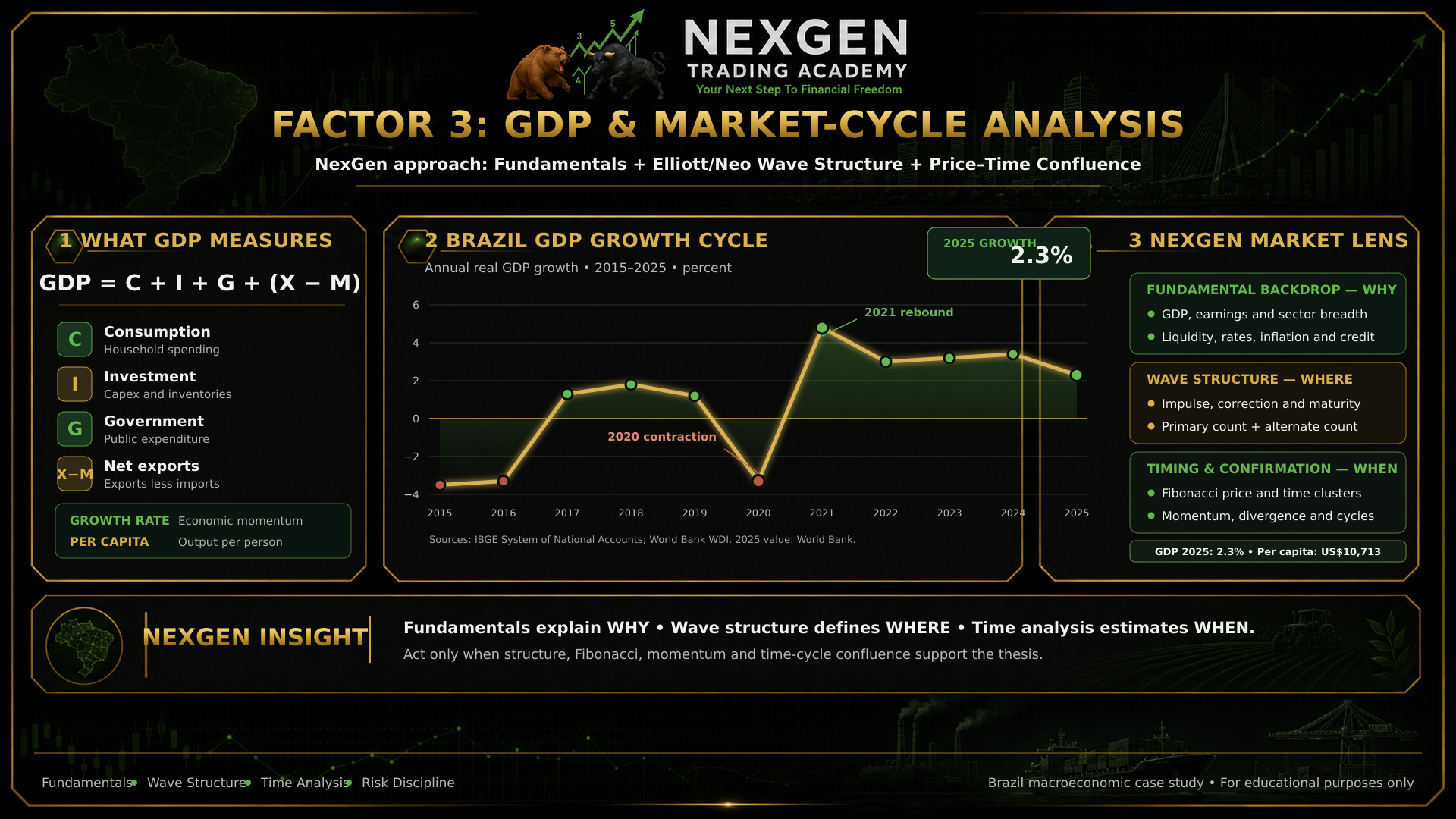
Mastering gross domestic product (gdp) builds lasting financial clarity, confidence, and disciplined execution.
Core Concepts & Foundational Principles
Summary & Key Takeaways
Mastering gross domestic product (gdp) is vital for developing sound financial and investment discipline..
Core Principle: Gross Domestic Product (GDP)
Key Mechanics & Frameworks
Consistent long-term habits create significantly greater wealth than short-term speculative decisions..
Continuous study and structured application of Macroeconomic Indicators and Their Impact on Stock Markets Understanding How Economic Forces Shape Investment Decisions empowers smart decision-making..
Summary & Key Takeaways
- Consistent long-term habits create significantly greater wealth than short-term speculative decisions.
- Mastering gross domestic product (gdp) is vital for developing sound financial and investment discipline.
- Summary & Key Takeaways.